



Land Freight Compared With Sea and Air Freight: Choosing the Mode That Fits Your Cargo
Every shipping decision comes down to a trade between speed, cost, capacity and reach. Choose the wrong mode and you either pay a premium for cargo that had days of slack, or you route a regional delivery through a port and lose the time you were trying to save. Knowing where land freight genuinely outperforms the alternatives, and where it does not, is the difference between a logistics budget that holds and one that quietly bleeds. As one of the land transport companies in Dubai that also books sea and air every day, we have no reason to push you toward one mode, so here is the honest comparison.
Land Freight Versus Sea Freight
Within the GCC, road transport routinely beats the water. A truck can collect at your door in Dubai and deliver in Riyadh, Dammam or Muscat in a matter of days, with no port cut-offs, terminal handling or double drayage at either end. Sea freight only pulls ahead on very high volumes or on long intercontinental lanes, where the low cost per unit of a container outweighs the extra handling. The practical rule our team uses is simple. For regional Gulf movements and for anything that benefits from true door-to-door delivery, book road freight. For heavy bulk crossing oceans, book sea. When a supply chain spans both, combine them, using ocean for the long haul into Jebel Ali and land freight transport for distribution across the region.
Land Freight Versus Air Freight
Air wins on outright speed over long distances, moving cargo between continents in days where a truck cannot go at all. But on regional GCC lanes the gap narrows sharply, because once you add airport handling, terminal waits and last-mile delivery at both ends, a well-run road service can land goods in a comparable window at a fraction of the cost. For urgent, light, high-value cargo travelling far, air is the right call. For heavy, bulky or cost-sensitive cargo moving across the Gulf, road freight transport is almost always the smarter spend. The two modes work best in partnership, with air held for the exceptions and road carrying the everyday regional volume.
Where Multimodal Beats Any Single Mode
The strongest supply chains rarely commit to one mode. A common pattern among the clients of the best road transport companies in UAE is to bring the bulk of international volume in by sea, hold a small air allocation for urgent replenishment, and rely on road for every regional movement from a Dubai warehouse. This structure gives ocean economics on the long haul, a fast lane for the exceptions, and flexible land freight logistics for distribution across the GCC. Coordinating all three under a single provider removes the seams where cost and delay usually creep in, and keeps one team accountable for the whole journey.
What This Means When You Choose a Partner
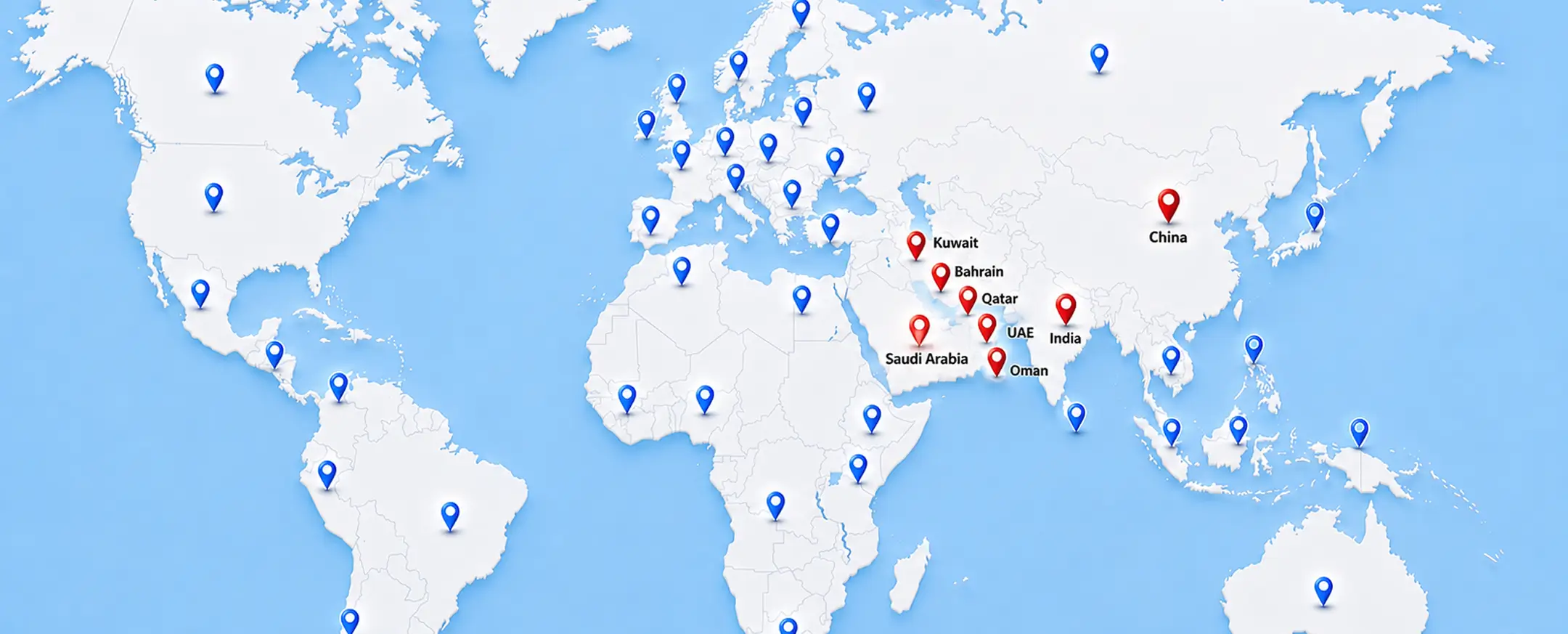
The mode is only half the decision. The other half is whether the provider has the fleet to secure trucks when demand tightens, the customs capability to clear cargo at the border without days lost to paperwork, and the network at destination to finish the job properly. Among land transport companies in Dubai, that combination is less common than the rate sheets suggest. AGS Logistics has been moving cargo since 2007, with an owned fleet of car carriers, side loaders, low beds and curtain siders, owned offices across the UAE, Oman, Qatar, Bahrain, Kuwait, Saudi Arabia, India and China, and a network of over 180 affiliated offices worldwide. Our in-house customs team clears GCC borders every day. Whether you need land freight services for a single cross-border load or a full regional distribution programme, the answer starts with a conversation about the cargo, not a rate on a screen.