



Air Freight Compared With Sea and Land Freight: Choosing the Mode That Fits Your Cargo
Every shipping decision comes down to a trade between speed, cost, capacity and risk. Knowing where air freight genuinely outperforms th e alternatives, and where it does not, is the difference between a logistics budget that holds and one that quietly bleeds. As an air freight company in Dubai that also books sea and road every day, we have no reason to push you toward one mode, so here is the honest comparison.
Air Freight Versus Sea Freight
Speed is the headline difference. Air moves a shipment from Asia or Europe into Dubai in a matter of days, against the two to four weeks a comparable ocean routing takes. That speed frees up working capital, because inventory spends far less time in transit, and it protects perishables, launch stock and production-critical spares whose value decays quickly.
Cost tilts the balance back toward the water: ocean cargo is charged by container or cubic metre and lands at a fraction of the air rate for the same consignment, and that gap widens as volume grows. The practical rule our team uses is simple. If the cargo is heavy, bulky, low in value density or planned well in advance, ship by sea. If it is light, urgent, high in value or perishable, book air freight. When a programme contains both, split it and use one forwarder so the two legs are planned against the same delivery date.
Air Freight Versus Land Freight
Within the GCC, road transport competes closely with air. A truck from Dubai to Riyadh, Doha or Muscat can be more economical than air for cargo that is not urgent, and it offers true door-to-door movement without an airport in the middle. Air pulls ahead the moment the deadline tightens or the distance grows. For a same-week delivery across the region, or for any cargo that has to reach a landlocked or distant market fast, air cargo clears the ground network comfortably.
Beyond the immediate region the comparison collapses altogether, because road cannot cross oceans and intercontinental trucking is limited by borders and permits. The intelligent approach is rarely to choose one over the other, but to pair them: air for the long fast leg into Dubai, road for regional distribution across the UAE and the GCC. That is precisely how our door-to-door programme is built.
Where Multimodal Beats Any Single Mode
The strongest supply chains rarely commit to one mode. A common pattern among the clients of the best air freight companies in Dubai is to move the bulk of annual volume by sea, hold a standing air allocation for replenishment gaps and urgent lines, and use road for regional distribution from a Dubai warehouse. This structure gives ocean economics on the majority of the volume while keeping a fast lane open for the exceptions, and it removes the temptation to fly an entire order because one line item ran short. Combining air freight forwarding services with sea and land under a single coordinator is how disciplined shippers keep both their costs and their deadlines under control.
What This Means When You Choose a Partner
The mode is only half the decision. The other half is whether the forwarder handling it has the carrier relationships to secure space when capacity tightens, the customs capability to clear cargo without storage charges piling up, and the network at destination to finish the job properly. Among air freight companies working out of the UAE, that combination is less common than the rate sheets suggest.
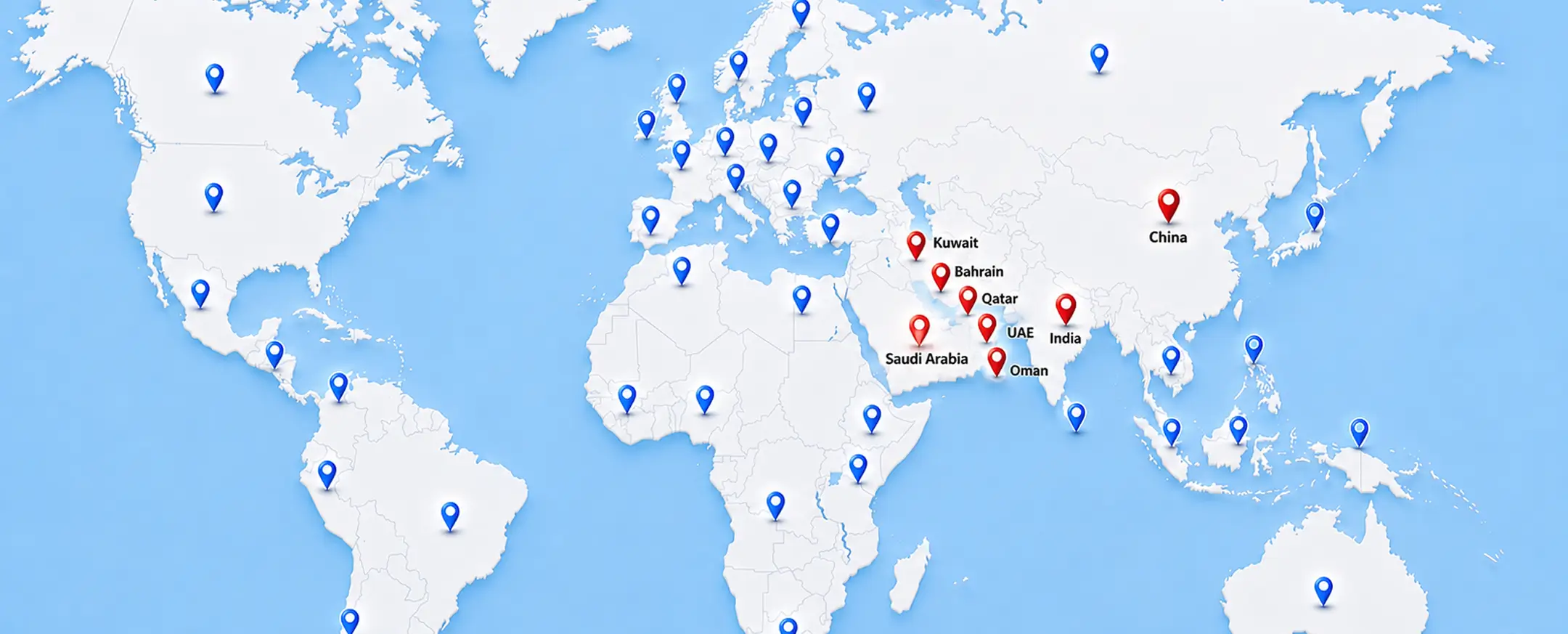
AGS Logistics has been booking cargo since 2007, with owned offices across the UAE, Oman, Qatar, Bahrain, Kuwait, Saudi Arabia, India and China, and a network of over 180 affiliated offices worldwide. We hold direct relationships with major carriers including Emirates, Qatar Airways, DHL and FedEx, and our in-house customs team clears through UAE airports every day. Whether you need air cargo services in Dubai for a single urgent consignment or a full annual programme, the answer starts with a conversation about the cargo, not a rate on a screen.